Ludlow Castle
The King's CurseLudlow Castle is the Welsh Marches stronghold in which Margaret Pole’s duties as guardian and household mistress converged with the Tudor succession. It was the home prepared for Arthur Tudor and Katherine of Aragon after their marriage, the place where Arthur died in Margaret’s care, and later the residence where she educated Princess Mary Tudor. Its changing households make the castle a measure of how dynastic hopes, private loyalties, and political authority shifted over several decades.
Setting and Household
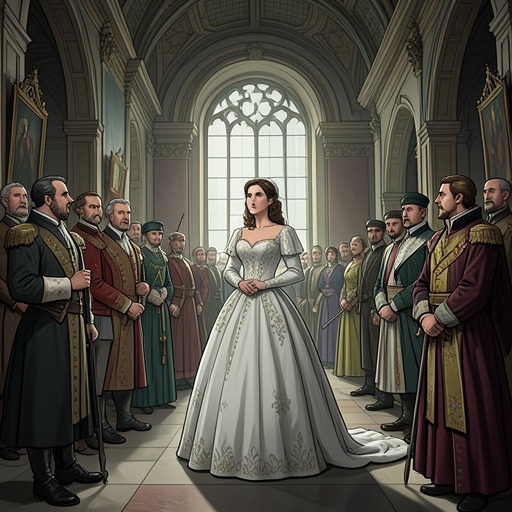
In spring 1500, Margaret returned to Ludlow Castle after giving birth, travelling with her husband, Richard Pole, to resume her responsibilities in the Welsh Marches. The town’s houses stood beneath the castle’s larger walls. Margaret was received there in her public role as the wife of the Lord Chamberlain to the Prince of Wales and as a royal cousin; Arthur came out to welcome her. Their greeting followed the forms of rank they had both been raised to observe: Arthur sought her blessing, and she acknowledged him as heir to the throne.
The castle was not simply a royal residence but a working household under Margaret’s management. When Arthur and his bride were expected to live there, she directed servants and household officers in preparing rooms and supplies. She arranged repairs intended to reduce drafts, had tapestries and lined curtains put up, ordered linen from London, and secured provisions from the surrounding countryside. The scale of the preparations reflected the household’s dual purpose: to make a distant residence fit for a princess and to sustain the young couple expected to represent the next generation of the monarchy.
Arthur and Katherine’s Residence
In winter 1501, Margaret went ahead of Arthur and Katherine to prepare for their arrival. The king wanted the newly married couple to travel to Ludlow promptly, presenting Arthur and his bride to the country as the future of the Tudor line. Margaret’s preparations therefore answered both domestic and political demands. She arranged accommodation for Katherine, whose Spanish attendants would be reduced for the journey, and organized food, servants, and other necessities for an extended residence far from London.
Margaret’s role continued after the couple arrived. As Arthur’s guardian and the lady of Ludlow, she was responsible for the young prince’s household and for the conditions in which he and Katherine would live. The castle thus became more than a place assigned to them by the crown: it was a home under her supervision, where the expected private life of the couple was bound to the public hope of securing the succession.
Arthur’s Illness and Death
Ludlow Castle became the setting of a sudden reversal. When Arthur fell ill, Margaret went to his bedchamber and found him feverish and weak. His household sought medical help, but he continued to worsen. Margaret remained with him as his condition deteriorated, and his confessor administered the last rites. Arthur died in the castle, where Margaret had been responsible for his care.
After his death, Margaret straightened his clothing, closed his eyes, and arranged for the women who would prepare his body. Her response links the political importance of Ludlow with the personal loss of a guardian who had treated Arthur as a beloved boy. The prince’s death also changed what the castle represented: it had been prepared as the home of a future king and queen, but became the place from which that particular dynastic future vanished.
The consequences extended beyond Arthur’s death. The circumstances of his marriage became disputed, and Margaret was later pressed to confirm what she had observed about the couple’s arrangements at Ludlow. Margaret Beaufort, Henry VII’s mother, questioned whether Arthur and Katherine had been brought together in Katherine’s rooms as ordered. The issue mattered because the validity of Katherine’s later marriage to Henry VIII depended on whether her marriage to Arthur had been consummated. Margaret said that the order had been carried out, but this did not settle what had happened between the couple. The castle’s domestic arrangements were thereby drawn into a dispute over marriage, legitimacy, and the crown.
Margaret’s Return and Princess Mary’s Household
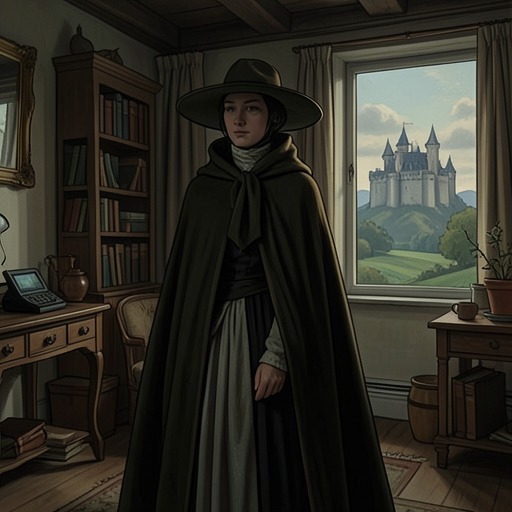
After four years away from court, Margaret was appointed companion and governess to the nine-year-old Princess Mary Tudor. She first met the princess at Thornbury Castle, then took her to Ludlow, where Mary was to take up a governing role in the principality. Margaret brought her daughter-in-law Constance to serve as one of Mary’s attendants and presented Ludlow as a place that could again become a happy home, though she did not tell Mary everything she remembered about Arthur and Katherine’s life there.
During 1525–26, Margaret organized Mary’s education without treating her as an ordinary child subject to command. She introduced tutors, encouraged music and exercise, and made lessons engaging. Mary studied, rode, and took part in music and dancing at the castle. Margaret’s approach depended on the princess’s affection and on the trust placed in her by Mary’s parents; Ludlow became a household where instruction and care could be carried out at a distance from the central court.
That distance also shaped what Mary was told. By the summer of 1527, news that Henry VIII sought to end his marriage to Katherine of Aragon was widely known, but Margaret maintained silence within the household at Ludlow. She wanted to shield Mary from alarming reports while reliable information was scarce so far from London. When Mary eventually had to leave to join her parents, Margaret accompanied her as far as St. Albans before returning to her own house. The castle’s separation from court could offer protection, but it could not keep the royal family’s crisis outside its walls indefinitely.
A Place Recast by Succession
Ludlow Castle’s successive roles expose the instability beneath royal ceremony. Under Margaret’s care, it served first as the residence of the prince whose future was expected to secure the dynasty, then as the site of his death, and later as the educational home of a princess whose own status would become entangled in her parents’ marital and political conflict. The castle’s household connected local administration and personal guardianship to questions decided at the highest level of the monarchy.
Margaret’s memories also give the place a continuing emotional and political charge. In her account, Ludlow remains associated with Arthur and Katherine’s life together, even as she suppresses memories that might become dangerous in the later dispute over their marriage. By the time Mary lives there, the castle is both a refuge from court gossip and a stage on which the next generation is prepared for royal responsibility. Its recurring function is to shelter heirs while making visible how little any household, however carefully managed, can control the succession’s outcome.